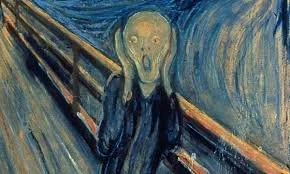
What is art?
In his book ‘What is Art?’, the Russian novelist Tolstoy wrote ‘To evoke in oneself a feeling one has once experienced, and having evoked it in oneself … ‘.

What is genetic engineering?
‘Genetic engineering’ is the direct manipulation of an organism's DNA using biotechnology to change its characteristics by adding, removing, or altering genes.

What is modus tollens?
Modus tollens (Latin for ‘mode that denies’) is a valid form of logical deduction. It is a conditional form (if-then).

What is an ad hominem fallacy?
An ad hominem fallacy (Latin for ‘to the person’) is considered to be a logical error where someone attacks the personal traits or motives of the person making an argument, instead of addressing the actual substance or validity of the argument itself.

What is democracy?
‘Democracy’ literally means ‘rule by the people’. There are different flavours of democracy but they all involve some sort of participation (or having a say) by the people in the governance of their society.

What is climate change?
Climate change is a long-term change in average weather patterns. This is natural and has always been going on throughout Earth’s history. Although often used synonymously, the term ‘climate change’ should be distinguished from ‘global warming’ (see, for instance, ‘What Is Climate Change?’).

What is modus ponens?
Modus ponens (Latin for ‘mode that affirms’) is a valid form of logical deduction. It is a conditional form (if-then) that we use frequently in everyday reasoning.

The Thailand/Cambodia conflict and ASEAN
Thailand and Cambodia are in conflict at the present time of writing (December 2025). Both are members of ASEAN, as is Singapore. What role can ASEAN play in helping to resolve the conflict?

What is an argument from ignorance?
An argument from ignorance is NOT an argument from someone who is ignorant! Rather, it is a logical fallacy claiming something is true because it has not been proven false, or false because it has not been proven true. Thus, it uses a lack of evidence as evidence itself; this shifts the burden of proof.